Assume the Free Tier Will Disappear: A CTO’s Toolchain Continuity Plan
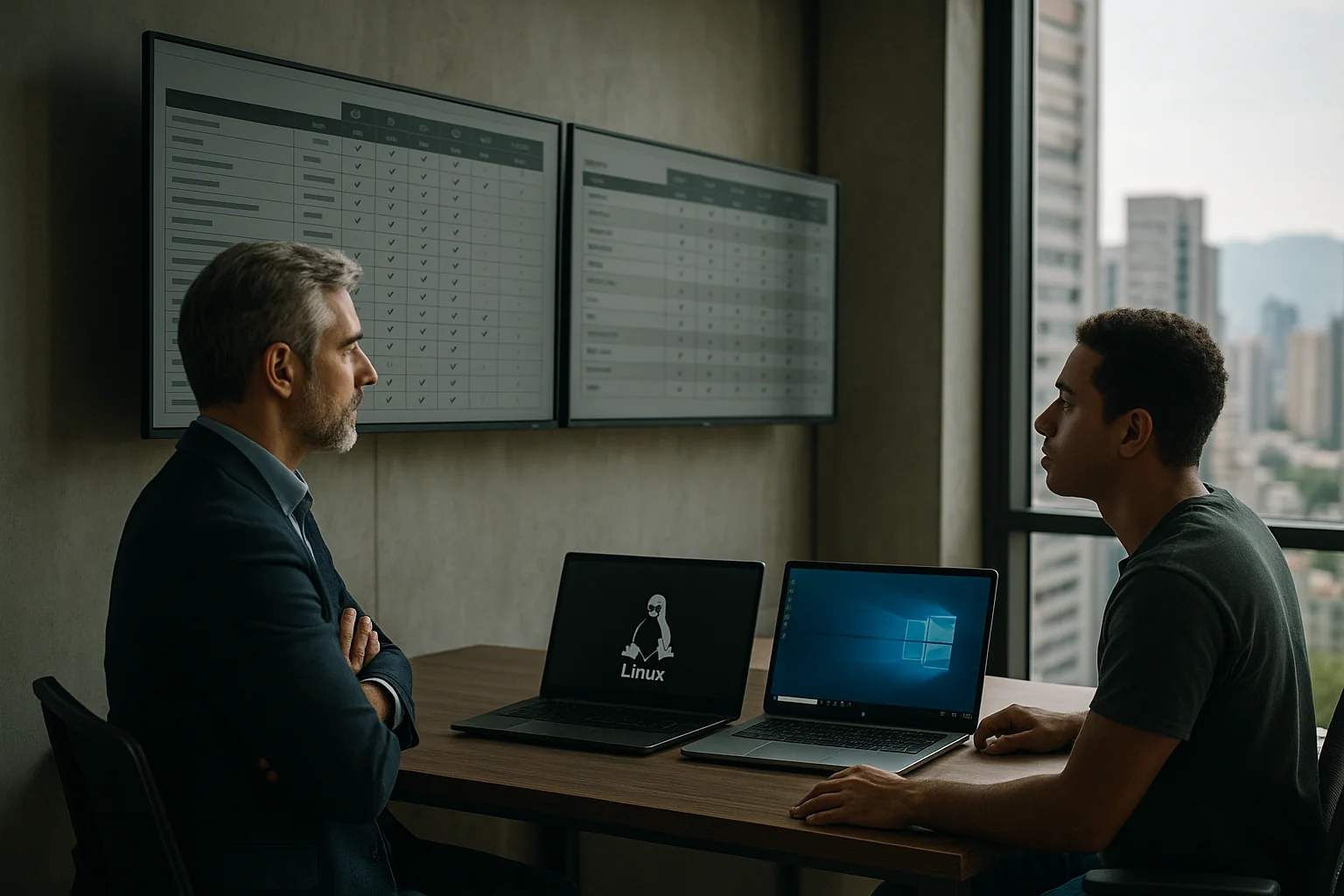
If your pipeline depends on “free,” you don’t have a pipeline—you have a coupon. Reports surfaced this month that Xilinx Vivado 2026.1 is dropping Linux support for the free tier while keeping it for paid users. That’s not a footnote. It’s a reminder that the free tier is a marketing budget line, not a contract. When the vendor blinks, your team bleeds time.
I’ve seen this movie before: Heroku’s free dynos sunset. Docker Desktop’s license change forcing businesses to pay. HashiCorp’s switch to BSL kicking off OpenTofu. GitHub “free” entitlements shifting as usage grows. None of those were malicious; they were business decisions. Your job as CTO is to make sure they’re not your outage.
The risk is bigger than a price change
Most CTOs think of free-tier risk as cost volatility. That’s too narrow. The more existential risks are:
- Platform gating: OS or architecture support removed in the only tier you use (e.g., free tier loses Linux support; Apple Silicon not supported; CUDA-only builds). Your nearshore team in Brazil running Ubuntu and Fedora is suddenly second-class.
- Distribution restrictions: License changes that prevent you from embedding or distributing tooling in your internal platform (e.g., BSL-like terms blocking managed service offerings or multi-tenant usage).
- Entitlement enforcement: Seat counts, SSO-only enforcement, or online license checks that break in air-gapped builds or during vendor outages.
- Format captivity: Proprietary project formats or build artifacts that don’t round-trip cleanly to open standards, making migration expensive or lossy.
When Vivado’s free tier reportedly drops Linux, a student loses convenience. A startup with a Linux-first hardware team loses days. Multiply that across your toolchain: IDEs, debuggers, container tooling, IaC, AI SDKs, design tools, browser testing, and your “free” stack is a minefield.
A toolchain continuity framework you can run this quarter
Here’s a playbook we implement with clients who can’t afford surprises. It’s opinionated because surprises don’t care about your feelings.
1) Inventory, then score replaceability
List every tool in your developer-critical path. Not everything—just what blocks PR-to-prod. For each tool, score three axes 1–5 (1 is bad):
- Portability: Does it use open formats and standard interfaces? (e.g., Terraform HCL vs. a closed DSL; ELF/PE vs. a proprietary binary container)
- Reproducibility: Can you build and activate it offline in a hermetic environment? (Deterministic builds, pinned dependencies, cached installers, offline license tokens)
- OS neutrality: Is first-class support available across Linux, Windows, and macOS for the tier you use?
Anything with a total score ≤7 is a red flag. Those are the tools you put on a continuity plan first.
2) Establish an “entitlement continuity” budget
Set aside 0.5–1.5% of engineering payroll as a ring-fenced budget to “turn free into paid” without approvals theater. If you run a 20-engineer team at a fully loaded $200k average, that’s $4M. One percent is $40k/year. That buys you 40–80 professional seats of many tools, or a handful of enterprise licenses, without a fire drill.
Why the range? If your stack skews toward closed-source (EDA, mobile device labs, proprietary SDKs), lean to 1–1.5%. If you’re mostly OSS with permissive licenses and good reproducibility, 0.5–0.75% is realistic.
3) Build dual-paths in CI for the top 3 risks
Pick the three lowest-scoring tools. Create a scheduled CI job (weekly) that runs an alternative path end-to-end. Don’t aim for parity on day one; aim for “we can ship next week if needed.” Examples:
- IaC: Maintain a parallel OpenTofu plan alongside Terraform. If license terms change again, you’re flipping a switch, not rewriting the world.
- Containers: Build images via both Docker BuildKit and an alternative like Podman/Buildah. Push to the same registry; verify byte-for-byte or metadata-level equivalence.
- AI SDKs: Keep an adapter that can hit at least two inference providers or self-hosted backends. Run nightly contract tests to assert identical response contracts (not content).
Yes, it’s extra work. No, you can’t amortize it with “we’ll migrate in a sprint.” Migrations never happen in a sprint; they happen during a client incident when you least want them.
4) Normalize project and artifact formats
Where you can’t swap tools, make their outputs portable:
- Project manifests: Export and store alongside source in open formats (JSON, YAML). If the primary tool stores a binary project file, keep a scripted export step each release.
- Test reports and coverage: Emit JUnit XML, LCOV, SARIF. Don’t be shackled to a vendor viewer.
- Design artifacts: For CAD/EDA, keep a gold copy in an open interchange format in addition to the native format.
The goal is simple: your repo contains enough to switch tools without reverse engineering.
5) OS neutrality by construction
Stop assuming “works on my laptop” covers your team. In Brazil, a large slice of senior engineers run Linux as their daily driver. If a vendor removes Linux support on the only tier you use, you have three options:
- Pay for the tier that supports the OS. Budget it now (see step 2). Don’t litigate it on Slack after the announcement.
- Centralize the tool on remote development boxes that run the vendor-supported OS. Expose via remote desktop/X11/VNC or a web GUI, wrapped with role-based access. 6–8 hours per developer to onboard is cheap insurance.
- Replace the tool with an OSS or paid alternative that supports your team’s OS. This is rarely free-time work; treat it as a project with a migration window and exit criteria.
Whatever you choose, enforce the same outcome in CI. If your CI still depends on an unsupported OS path, you don’t have continuity.
6) License and auth fire drills
SaaS and license servers go down. SSO breaks. Tokens expire. Practice like you mean it:
- Offline activation test: Quarterly, run your build and critical tools with the internet blocked. Document what fails. Capture the steps and credentials needed for offline activation or emergency keys.
- Seat-reassignment RTO: Time how long it takes to reclaim a seat and reassign to an engineer starting today. If it’s more than 15 minutes, you need better process or vendor support.
- Vendor auth fallback: Maintain an emergency break-glass account with local auth for critical platforms where SSO is a single point of failure.
Mean time to restore matters more than mean time to failure. Create a scoreboard. Improve it.
7) Watch the EULA like you watch prod
Create a lightweight “terms watcher” process:
- Monitor URLs of pricing, license, and terms pages for diffs. You don’t need fancy tooling; a daily HTTP diff with HTML-to-text normalization works.
- DRI rotation: Assign a monthly DRI to review changes and summarize impact in 3 bullets to #eng-leadership.
- Pre-negotiate with vendors you depend on. Ask for 90-day notice on material changes in your MSA, offline keys for CI, and language around OS support stability.
It’s cheaper to negotiate when you’re not in a panic.
8) Quantify the cost of doing nothing
Leaders fund what’s measured. For each red-flag tool, estimate:
- Switching time: Hours to stand up an alternative path to “shippable.” Include CI, docs, onboarding, and parity acceptance tests.
- Impact of a freeze: If the free tier or OS support disappeared today, how many PRs per day would be blocked, and for how long?
- License cost: Annualized cost to move to a paid tier that solves the risk. Most dev tools land in the USD $200–$600 per seat per year range or $5–$25 per seat per month, with enterprise tiers higher.
When you put “$40k buys continuity vs. $250k of lost engineering time during a two-week freeze” on a single slide, CFOs say yes.
Concrete examples (and what good looks like)
Docker Desktop’s licensing pivot
When Docker changed licensing for business use, teams that had already separated “developer convenience” from “CI necessity” barely flinched. They had server-side BuildKit workers in CI and local alternatives or licensed Desktop for devs. The laggards held a 700-message Slack thread debating five-figure spend vs. “we’ll just uninstall it,” and lost a week.
What good looks like: Your CI builds run on headless Linux workers with containerd/buildx. Local devs either have paid Desktop or a documented Podman/nerdctl setup. The build system doesn’t care.
HashiCorp’s license change and OpenTofu
When HashiCorp moved to the Business Source License, some companies discovered obligations they couldn’t meet for their internal platforms. The ones with a parallel OpenTofu plan could shift in days, not quarters.
What good looks like: A nightly “drift check” that plans both Terraform and OpenTofu against a non-prod account and asserts zero resource deltas. Your module registry and pipelines are dual-compatible.
Vivado free tier reportedly dropping Linux
Hardware and embedded teams on Linux will either budget for paid seats or centralize the tool on remote Windows hosts. The worst option is status quo plus hope.
What good looks like: A small pool of Windows or supported Linux VMs running Vivado with floating licenses, proxied into your private network. Engineers develop locally but synthesize on the farm. CI runs headless jobs using the same farm. Procurement knows the ceiling: “We carry 10 floating seats; bursting to 20 costs $X/day.”
Nearshore reality check: Brazil runs on Linux
If you’re working with nearshore teams in Brazil, bet on Linux being the daily driver. Why it matters:
- Friction shows up in merge velocity: Every unsupported-OS workaround costs 1–2 hours per dev per week. On a 10-person squad, that’s ~400 hours a year—$60k–$80k fully loaded in US terms.
- Paid seats beat wasted sprints: If a pro license is $25/month per seat and saves 1 hour/week, you’re buying back $400–$600 of productivity per engineer per month for $25. That’s a 16–24x ROI.
- Remote tool farms close gaps: Put GPU/EDA/Windows-only tools on proxied VMs in sa-east-1 (São Paulo) or on-prem in Brazil to keep sub-50ms latency to your team. Engineers stay on their preferred OS; CI stays stable.
Nearshore isn’t “cheap engineers.” It’s time zone overlap and seniority. Don’t erase those advantages with toolchain friction you could have paid to remove.
Run this 30/60/90 and be done with it
Day 0–30: See your risk
- Build the inventory. Score portability, reproducibility, OS neutrality.
- Pick the worst three. Draft migration targets and alternatives.
- Create the budget line. 0.5–1.5% of engineering payroll. Pre-approve spend up to that cap for the VP Eng or Head of Platform.
Day 31–60: Create outs
- Stand up dual-path CI jobs for the top three. They can run weekly; they just need to work.
- Normalize exports and artifacts. Add “portable export” steps to your release pipelines.
- Pilot a remote tool farm for one OS-gated tool. Measure onboarding time and developer latency.
Day 61–90: Operationalize
- Run an offline activation drill and seat-reassignment timed exercise. Publish RTO.
- Set up terms/watch diffs and DRI rotation. First summary memo goes to #eng-leadership.
- Negotiate with your top two vendors for notice periods, offline keys, and OS support commitments. Lock them into your MSA or renewal.
After 90 days, you will have turned “free-tier hope” into “continuity you control.”
What not to do
- Don’t wage philosophical wars over whether a vendor “should” support your OS in a free tier. They’re not your platform team. You are.
- Don’t count on heroic migrations during an incident. If the alternative path doesn’t run weekly, it doesn’t exist.
- Don’t centralize everything “just in case.” Centralize selectively where OS or licensing gates you, not as dogma.
- Don’t hide the bill. Show finance the cost-of-doing-nothing math. Continuity is cheap compared to stalls.
If you take nothing else from this
The free tier will disappear at the worst possible time—or, worse, it will remain, but the one feature you rely on (Linux support, headless mode, offline activation) will quietly move up a pricing page. Treat “free” as a trial, not a foundation. Your developers deserve better than a toolchain held together by a coupon code.
Key Takeaways
- Score your tools for portability, reproducibility, and OS neutrality; anything ≤7 needs a continuity plan.
- Budget 0.5–1.5% of engineering payroll to “turn free into paid” without drama.
- Maintain weekly dual-path CI for your top three risky tools; migrations that aren’t rehearsed don’t exist.
- Normalize exports and artifacts so your repo is portable, not captive to a vendor format.
- Plan for OS gating: buy the tier, centralize on a tool farm, or replace the tool—deliberately.
- Run license/auth fire drills and watch EULAs like you watch prod; negotiate notice and offline keys.
- Nearshore teams in Brazil are Linux-heavy; removing OS friction returns 16–24x ROI on modest license spend.