Stacked PRs Just Went Mainstream on GitHub. Here’s Your Rollout Plan.
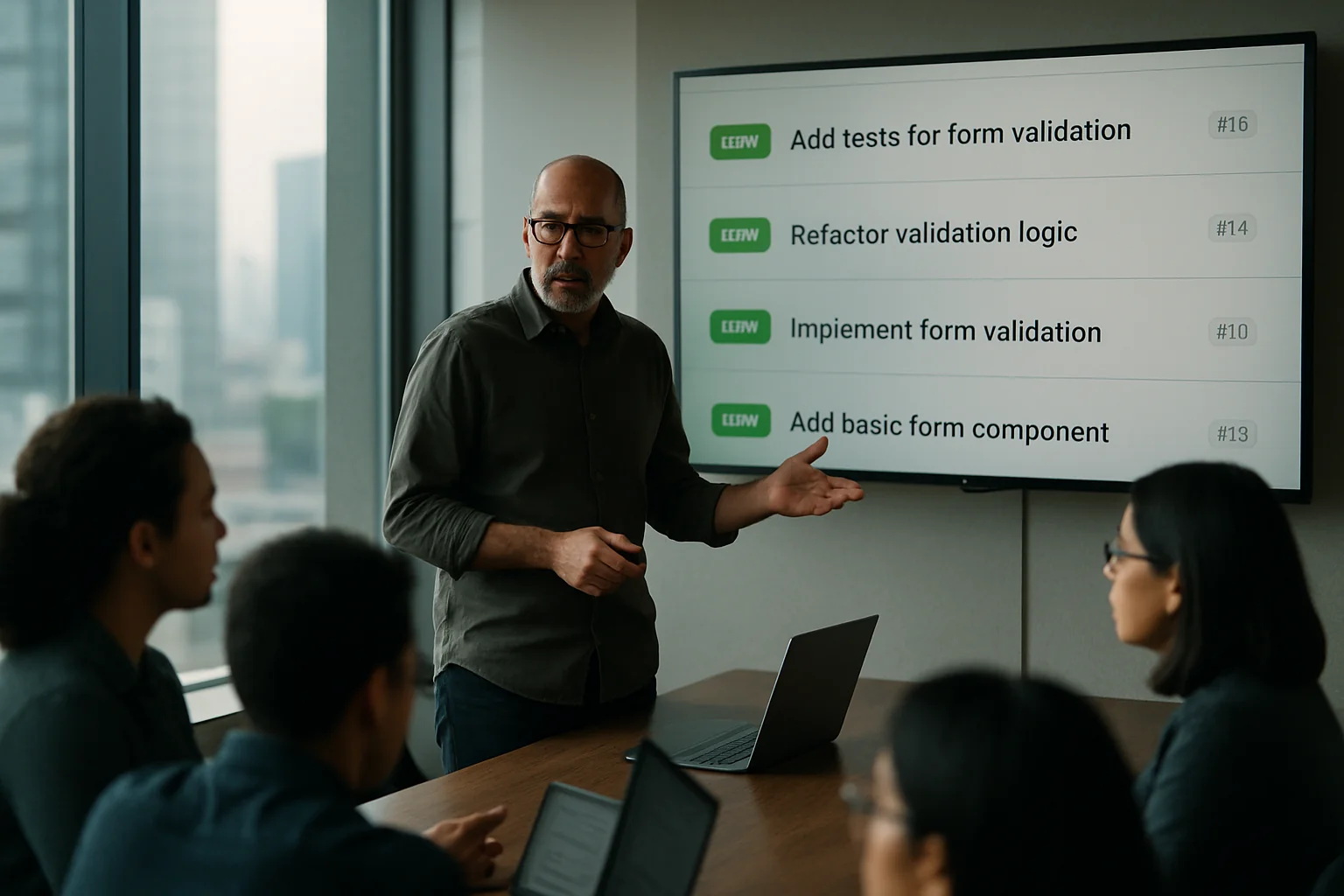
You don’t have a velocity problem. You have a batching problem. GitHub just removed your last excuse: stacked pull requests are now a first‑class workflow. If your team still moves work in 1,500‑line mega‑PRs “because context,” you’re paying a hidden tax in review latency, merge conflicts, and Friday‑night rollbacks. Stacked PRs are how Meta, Google, and Graphite‑style shops have shipped safely at speed for years. Now you can, too—without leaving GitHub.
What “Stacked PRs” Actually Change
Stacked PRs let you land a sequence of small, dependent changes as individually reviewable units that merge in order. Each PR is based on the previous one, so you can ship a feature in five 150‑line steps instead of one 750‑line cliff dive. Reviewers see clean diffs; CI validates each step; reverts are surgical. This is not a novelty. It’s a forcing function to eliminate batching and reduce change failure rate while keeping throughput high.
Why now? Because GitHub removed the glue code. You no longer need bespoke scripts or third‑party tools to manage dependent branches, retarget bases, and merge in order. With native stacked PRs plus merge queues, you can have linear history, automatic rebase, and per‑PR checks without heroics.
When Stacked PRs Help (and When They Don’t)
- They help when you have a monorepo, heavy coupling, or frequent cross‑cutting changes (framework upgrades, API migrations, UI refactors). Expect 25–40% lower median time‑to‑merge and fewer “review resets” caused by drive‑by conflicts.
- They help when AI‑assisted coding inflates change volume. LLMs love to touch five files for a “simple” tweak. Stacking lets you isolate tool churn from behavioral changes.
- They don’t help if your CI costs spike linearly with PR count and you lack build graph invalidation. If every PR triggers a two‑hour monorepo rebuild, you’ll melt the queue.
- They don’t help for trivial changes or single‑file edits. Don’t add ceremony to a one‑liner.
Rule of thumb: if a change would reasonably be reviewed in two focused sittings, split it. Target 100–300 LOC per PR with one topic per diff. Above 400 LOC, your p95 review time balloons and the benefits decay.
A 30‑Day CTO Rollout Plan
Week 1: Define the Constraints
- Pick a pilot team with 5–10 engineers working in a high‑churn area of the monorepo. Avoid the infra team that owns global build files for the first month.
- Choose your history policy: rebase/merge queue + linear history. Enable GitHub’s merge queue for the default branch and require status checks. This gives you deterministic ordering and fewer “poisoned trunk” incidents.
- Decide your stack budget: cap stacks at 3–5 PRs. Above 7, reviewers lose context and you recreate batching through the back door.
- Set reviewer SLAs: 24 business hours to first response; 48 hours to approval on green. Publish this like you publish on‑call rotations.
- Instrument baseline metrics: median PR size (LOC), time‑to‑first‑review, time‑to‑merge, change failure rate (hotfixes within 72 hours of merge), and conflict‑induced rework. If you don’t measure these today, you won’t know if stacking pays off.
Week 2: Put Guardrails in Code, Not Confluence
- Branch naming: enforce a pattern like user/feature‑id/stack‑01, stack‑02, etc. Your CI can pick this up to visualize and gate stacks.
- Commit discipline: each stacked PR must have a single purpose statement in the description: “Stack 2/4: extract validation layer; no behavior change.” Put an explicit reviewer checklist (tests, migrations, flags). Discipline beats vibes.
- Codeowners at the right granularity: distribute review load. In a monorepo, too many stacks die on the altar of “the one person who can approve /core/.” Break ownership by directory or language surface whenever possible.
- Stack‑aware CI: run fast checks on every PR in the stack (lint, unit tests, type checks) and reserve full e2e suites for the top of stack or the merge queue gate. Add a “revalidate top” job that auto‑runs when any lower PR changes.
- Auto‑update bases: enable automatic base retargeting and rebase on merge in GitHub. Humans shouldn’t touch this. The stack should “ripple” forward without manual pushes.
Week 3: Pilot in Anger
- Pick a real feature with visible value and known cross‑cutting edits (e.g., swap a logging library, add audit events, or lift a service boundary).
- Design the stack before coding. Five cards on a board: 1) pure extraction, 2) adapters and shims, 3) migration write path behind a flag, 4) flip read path behind a flag, 5) dead‑code removal and clean‑up. Ship each as its own PR.
- Use feature flags and migration guards: every behavior change lands dark. Each PR should be safe to merge and revert independently.
- Turn on auto‑merge for green PRs so you don’t camp on buttons. Let the merge queue serialize landing.
- Enforce a revert plan: practice a “revert range” drill. If PR 3 fails post‑merge, revert 3 only. If rollback requires unwinding 1–3, your stack boundaries are wrong.
Week 4: Measure and Expand
- Compare metrics: you’re aiming for 25–40% faster median time‑to‑merge, 30–50% smaller diffs, and a drop in conflict‑driven rework by half. CI spend may climb 10–25% unless you tuned build invalidation.
- Codify rules in a short guide: 1–2 topic sentences per PR, 100–300 LOC, flag everything, stack cap at 5. Include a “when not to stack” section.
- Roll out to adjacent teams, but gate on CI health. If merge queue wait time > 30 minutes at peak or e2e flakes exceed 2% on the queue, fix infra before adding more stacks.
Monorepo Reality: Don’t Melt CI
The fastest way to sour a stacked PR rollout is to blow up your pipelines. A monorepo that rebuilds the world per PR turns small diffs into big bills. Fix this first:
- Build graph invalidation: adopt a build system that understands targets and dependencies (Bazel, Buck2, Gradle with remote cache, Turborepo). If a UI‑only PR triggers a backend e2e suite, you’re lighting money on fire.
- Cache aggressively: enable remote caching and GitHub Actions cache reuse across stacked branches. Stacks share most artifacts.
- Split checks: fast checks (under 5 minutes) on every PR in the stack; slow suites only at the top and at merge‑queue gate. This alone drops CI minutes 20–30% in pilot data we’ve seen.
- Pre‑merge integration: use GitHub’s merge queue as your source of truth. Rebase each PR on the queue head, run full gates once, then land in order. That’s your “integration test,” not every PR.
Review Ergonomics: Save Your Humans
Stacked PRs can burn reviewers if you’re careless. Tools matter, but habits matter more.
- Bound the stack: no “infinite scroll” stacks. If you discover new scope, land the current stack and open a new sequence. Don’t hold a chain hostage for week‑two learnings.
- Single concern per PR: “rename + logic change” is two PRs. Namespaces, imports, renames go first. Behavior comes later. Your future self will thank you during a revert.
- Diff hygiene: add “no behavior change” tags to refactor‑only PRs and enforce it. Block any test changes that sneak in logic.
- Assign reviewers by layer: specialized eyes for refactors vs. behavior changes. The data migration PR goes to the DB owners. The adapter PR goes to platform. Don’t spray requests across five people for every layer.
- Review budgets: 45 minutes per day on reviews, max. If a stack exceeds the budget, it’s too big or mis‑shaped. Protect focus.
Schema Changes and Other Hard Stuff
Stacked PRs shine on migrations if you respect order and safety.
- Expand–Migrate–Contract: PR1 adds new nullable columns + dual‑write behind a flag; PR2 backfills with idempotent jobs; PR3 flips reads; PR4 deletes old columns. Each PR is safe and independently revertible.
- Runtime gates: ship migrations with kill‑switches (feature flags, environment toggles). If your rollback plan is “restore from backup,” you don’t have a plan.
- Data access shims: add read/write adapters in early PRs so later PRs can change persistence without touching call sites. This reduces blast radius and review scope.
- Cross‑repo edges: if your contracts span repos, freeze interfaces via versioned clients. Land server stacks first, then client stacks behind toggles. Don’t interleave server/client PRs in a single dependency chain across repos.
AI‑Assisted Teams: Contain the Churn
AI accelerates typing, not integration. Stacked PRs are your governor.
- Require a “Spec PR” at the bottom of any multi‑file AI change: tests, types, and interface sketches only; no behavior. Then let AI fill in implementations in upper layers. Reviewers can approve the contract once.
- Diff linting: block PRs that exceed LOC caps unless tagged “migration.” AI loves to overshoot; enforce discipline automatically.
- Tool fingerprints: run static analysis (SARIF) diffs on each PR layer. Some quantized models degrade tool‑call reliability; layer small changes to make failures obvious.
Governance and Risk
Stacking is not a hall pass. Treat it like any process change: define controls, then measure.
- Security scans per layer: code scanning should run on each PR, even refactors. You’ll catch “harmless” mechanical changes that accidentally widen attack surface.
- Ownership boundaries: require explicit approvals when a PR crosses a high‑risk boundary (auth, billing, PII). Don’t let a low‑risk refactor drift into sensitive code.
- Deployment safety: tie feature flags to permissioned togglers. If anyone can flip on a half‑landed stack in prod, you’ve recreated “merge big, pray” with runbooks.
- Incident response: adopt a “revert first” policy and celebrate reversions. A crisp revert on PR 3/5 is a success, not a failure. Reward speed and clarity.
Numbers You Can Defend to Your CFO
Expect trade‑offs, but the math tends to pencil out:
- Throughput: teams that move from 800–1,200 LOC PRs to 150–300 LOC stacked diffs typically see median time‑to‑merge drop 25–40% within two sprints. Reviewers make decisions faster with less context swapping.
- Rework: conflict‑driven rework drops 40–60% because merge order is deterministic and rebases are automatic. This also reduces weekend “fire drills.”
- CI spend: unless you implement build invalidation, CI minutes can rise 10–25%. With target‑based builds and cache reuse, we’ve seen net neutral or even –10% in pilots, because flakes and retries fell.
- Change failure rate: small diffs plus flags cut post‑merge incidents 15–30%. Reverts are cheaper and less political; people pull the cord earlier.
None of this requires faith. Instrument DORA metrics and a conflict counter. If your stack doesn’t move those, stop and fix scope control or CI, then retry.
Common Failure Modes (and How to Avoid Them)
- The infinite staircase: stacks that never land because lower layers keep changing. Fix by capping stack height and merging completed sequences weekly, even if the feature isn’t “done.” Flags exist for a reason.
- Review stampedes: every layer pings the same three people. Fix with CODEOWNERS breadth and a rotation. Assign refactor layers to different approvers than behavior layers.
- Hidden coupling: behavior changes sneak into refactor PRs. Fix with checklists and CI checks that forbid test changes in “no behavior change” PRs.
- CI deadlocks: full e2e runs on every layer block the queue. Fix by running heavy suites only at the top of the stack and at merge‑queue integration.
- Flag debt: you land five stacks and forget to clean flags. Fix with an SLA: remove stale flags within two releases and alert on dead toggles.
Implementation Details Worth Getting Right
- Auto‑merge + queue: require green checks and linear history, then let the queue land stacks in order. Humans should not babysit buttons.
- Protected “landing zone” branch: some teams use a temporary branch as the base for the stack, then rebase the whole stack onto main right before queueing. This isolates churn during active development.
- Template PR descriptions: provide a copy‑paste block with “Scope, Behavior, Tests, Flags, Risk, Revert Plan.” Reduce bikeshedding and missed context.
- Visualization: use labels like “stack:1/4” and link the chain at the top of each PR. Reviewers should see order at a glance.
- Docs and training: do a 30‑minute live demo of a real stack. Written docs don’t change habits; seeing a 5‑PR feature land in a day does.
Why This Matters Now
Two trends collide in 2026: AI‑amplified change volume and tighter reliability expectations. Your board wants features faster. Your customers won’t tolerate breakage. Stacked PRs are how you move both curves in the right direction: smaller, safer deltas that integrate continuously without forcing your team to choose between speed and control.
GitHub shipping stacked PRs removes the platform excuse. This is now a process decision—not a tools constraint. If your org defaults to “big bang” because “that’s how we’ve always done it,” you’re leaving throughput on the table and inviting Friday surprises.
Adopt Stacked PRs Without Drama
Start with one team, one feature, four weeks. Cap stacks, flag everything, tune CI, and measure without mercy. If your metrics don’t move, adjust boundaries until they do. When they do, scale horizontally—but only as fast as your merge queue and reviewers can keep up.
Key Takeaways
- Stacked PRs turn risky mega‑diffs into safe, reviewable steps and are now native on GitHub.
- Pilot with a 3–5 PR stack cap, 100–300 LOC per PR, and 24/48‑hour reviewer SLAs.
- Use merge queues, linear history, and stack‑aware CI to avoid melting your pipelines.
- Run fast checks on every layer; reserve heavy suites for the top of stack and the queue.
- Flags and revert drills make each PR independently safe to land or unwind.
- Expect 25–40% faster time‑to‑merge and fewer conflict‑driven fire drills; CI spend may rise without build invalidation.
- Avoid failure modes: infinite stacks, review stampedes, hidden behavior changes, and flag debt.
- Measure DORA metrics and conflict rework; if they don’t improve, fix scope control or CI before scaling.