Your AI Pair Programmer Isn’t Welcome Upstream: An OSS Contribution Policy for 2026
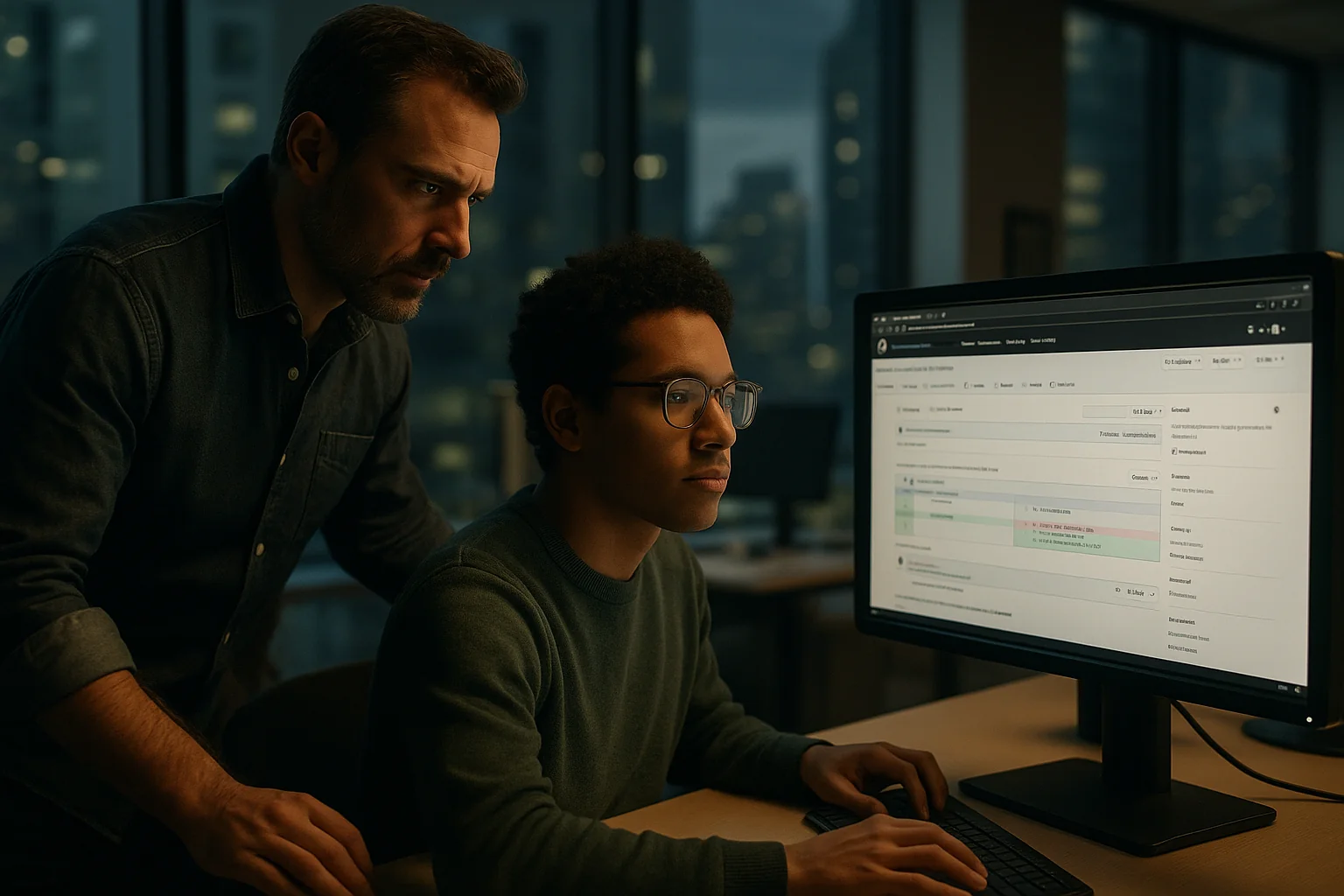
Open source gave your startup a head start. But in 2026, your AI pair programmer is not welcome everywhere. The Godot project publicly announced it will no longer accept AI‑authored code, full stop. Others are quietly moving the same way. If your engineers ship AI‑generated patches upstream, expect rejections, friction, and in some cases, org‑level bans. This isn’t theoretical reputational risk; it’s a pipeline and policy problem you can fix.
Why this matters now
Three currents just collided:
- Maintainers are drawing hard lines. Godot’s ban is explicit. Many projects now require DCO sign‑off and expect you to be able to legally attest authorship. “Copilot wrote it” doesn’t qualify.
- Vendors are adding provenance signals. Developers have reported IDE agents and SaaS tools leaving identifiable traces in requests or content. Even if the tech is imperfect, assume reviewers can and will ask how code was produced.
- Workflows beat models. Anthropic’s recent push with Claude Science emphasizes workflow over raw model power. Treat that as a hint: your contribution process—not your model lineup—decides whether upstream accepts your patch.
The payoff for getting this right is material. Accepted upstream patches reduce your private fork maintenance tax, drop merge‑conflict toil, and keep your security posture aligned with mainline fixes. Conversely, being branded as an “AI code dumper” costs you time, community goodwill, and velocity.
Define the line: AI‑authored vs. AI‑assisted
If you lead engineering at a startup or scale‑up, you need a company‑wide definition you can defend under the Developer Certificate of Origin (DCO) and common Contributor License Agreements (CLAs):
- AI‑authored code: Code where a model’s output forms the substantive logic of the change (e.g., pasting a generated function or module). Treat as disallowed for projects that ban AI contributions.
- AI‑assisted workflow: Using models for non‑authorship tasks—design reviews, test idea generation, doc editing, API summarization, refactor plans—while a human writes and owns the code. Often acceptable if disclosed, and usually safe even where authorship bans exist.
Write this down. Train your teams. Enforce it in tooling. Your nearshore pods should operate on the same rubric as your headquarters team with the same 6–8 hours/day overlap, so there is no policy drift.
The risk landscape you actually face
- Policy non‑compliance: Projects that ban AI‑authored patches will reject or escalate. A few have publicly threatened org‑level blocks for repeat offenses.
- License provenance: Generators can regurgitate licensed code. You may not notice; maintainers might. If you signed a DCO, that’s your problem, not the vendor’s.
- Supply‑chain trust: Many ecosystems are moving toward stronger provenance (SLSA, in‑toto attestations, SBOMs). If you can’t explain how the patch was made, teams won’t trust what you shipped.
- Data exposure: If prompts include proprietary code or partner details, sending them to third‑party models can create leak paths. Treat prompts and chat logs as sensitive.
A decision framework for contributing without drama
1) Classify upstreams by AI policy
- Ban: No AI‑authored code. Often no AI‑generated text either.
- Assist with disclosure: Human‑authored code is fine; disclose any AI assistance.
- Silent/unclear: No stated policy. Default to Assist with disclosure.
Create a machine‑readable registry in your org (for example, a small YAML file in an internal repo) mapping each target upstream to one of these three states, with links to each project’s policy.
2) Set AI operating modes per repo
- Ban repos: Disable inline code completions and generators. Allow review, explanation, and doc editing. No pasting model output into diffs.
- Assist with disclosure: Allow generators for tests and docs. For production code, require human rewrite: model output can inspire, not land directly. Disclose assistance in PR template.
- Silent repos: Treat like Assist with disclosure until the maintainers clarify.
Enforce this in your IDE. For VS Code, use workspace settings to disable specific extensions (Copilot, Codeium, etc.) per worktree. Keep a separate workspace for each upstream with the right mode baked in. This is boring and that’s the point.
3) Don’t paste—transform
If a model helped you think, your output should be a human transformation: hand‑written code, commit messages in your voice, minimal diff. Keep the patch small. A maintainer is far more likely to accept a 30‑line surgical fix than a 600‑line AI drop. If a generator proposed 600 lines, aim to land the 60 that matter.
4) Treat prompts and logs as sensitive
- Default to local or enterprise‑scoped models for repo‑context operations. Keep prompts and embeddings in your VPC.
- Mask proprietary identifiers if you must use SaaS models. Never include partner secrets or internal tokens in prompts.
- Retain an internal log of AI assistance only for audit—not for upstream. Keep retention short (30–90 days) and access controlled.
5) Ship an evidence pack with each PR
- Short design note explaining the bug/root cause, constraints, and why this approach.
- Minimal, readable diff with focused tests. Tests are your friend; AI‑generated tests are generally acceptable when they’re clear and pass.
- DCO sign‑off and, if the project prefers, a CLA on file. Don’t bury authorship behind bots.
- Optional disclosure if policy requires: “LLM used for test case ideas and doc editing; code is human‑authored.”
6) Add a contribution mirror with guardrails
Use Copybara (or an equivalent) to maintain a clean mirror for upstream contributions:
- Source: Your internal working repo (where teams can use AI freely for ideation).
- Transform: Copybara enforces filters: drop large generated files, strip “Generated by …” headers, normalize license headers, run secret scans (gitleaks), and run license provenance checks (scancode‑toolkit or FOSSology).
- Destination: A public contrib repo where patches are small, authored, and policy‑compliant. From there, you open PRs upstream.
This separation makes policy enforcement mechanical, not spiritual. It also gives you a single place to prove clean authorship if a maintainer asks.
A 30‑60‑90 day blueprint
Days 1–30: Inventory and kill obvious footguns
- Inventory your top 50 upstreams by dependency weight and change frequency. Record their explicit AI policies (or lack thereof).
- Publish a one‑pager with your AI‑authored vs AI‑assisted definitions, mapped to Ban/Assist/Silent categories.
- Configure IDEs by workspace to disable generators for Ban repos. Use Git worktrees for clean separation, inspired by the recent wave of “parallel worktrees” workflows.
- Add pre‑commit hooks to flag generated file headers, vendor boilerplate, and secrets. gitleaks + a light regex pass for common “Generated by …” strings is a good start.
Days 31–60: Put a contribution mirror in the path
- Stand up Copybara to shuttle patches from your internal workspace to a public contrib repo. Lock in transformations: license cleanup, file allowlists, secret scans, and size caps.
- Run provenance scans in CI: scancode‑toolkit or FOSSology for license tags; similarity tools (MOSS/JPlag‑style or token‑level diffing) to catch pasted chunks from non‑compatible sources.
- Standardize PR templates per policy class. Include boxes for DCO sign‑off and, if required, a short AI‑assistance disclosure. Keep it terse.
- Train your nearshore pods (Brazil, 6–8 hour overlap with US time zones) on the workflow so they can land patches during maintainer hours. Run shadow PRs on a low‑stakes repo to validate the mirror.
Days 61–90: Institutionalize and measure
- Codify exceptions: For repos that allow AI‑authored code, document where and why you’ll use it (e.g., benchmarks, fuzzers, migrations).
- Create “OSS sheriffs”: Two senior engineers per tribe who own upstream relationships and mediate policy questions.
- Track metrics: PR acceptance rate, rework rate due to policy, time‑to‑first‑response, and average diff size. Review monthly.
- Review vendor posture: Prefer enterprise or self‑hosted models for any context‑rich tasks. Treat any vendor‑added identifiers in content or requests as sensitive metadata—route through egress you control, or don’t send at all.
Concrete example: landing a patch in a ban repo
Scenario: Your team depends on an open‑source database, FooDB. It has a documented ban on AI‑authored contributions. You discover a bug that affects your workload.
- Repro and design: An engineer in São Paulo reproduces the issue, writes a 200‑word design note, and sketches a minimal fix. They use an LLM privately to sanity‑check edge cases and propose test inputs. No generated code is pasted.
- Worktree + settings: They create a dedicated Git worktree for FooDB with AI generators disabled in VS Code for that workspace.
- Code the fix: They write a 28‑line patch and 40 lines of tests by hand. The LLM remains in “review mode” to critique complexity and suggest doc nits.
- Mirror checks: Pushing to the internal contrib branch triggers Copybara: license normalize, gitleaks, scancode. All green.
- Open PR: The PR includes the design note, DCO sign‑off, and a checkbox: “LLM used for test input ideas and doc editing; code is human‑authored.”
- Response: Maintainer asks one question; patch merges in 48 hours. Your fork stays thin; your security fixes flow from upstream without hand‑merges.
Tooling that keeps you out of trouble
- Contribution mirror: Google Copybara. Alternatives exist, but Copybara’s transform model is battle‑tested for multi‑repo flows.
- Scanning: gitleaks for secrets; scancode‑toolkit or FOSSology for license provenance; lightweight similarity checks to catch high‑risk paste events.
- IDE policy: Workspace‑scoped extension settings; per‑repo “AI operating mode” files your bootstrap scripts honor.
- Authorship hygiene: DCO sign‑off in every commit; no bot authors for substantive changes. If a project requires a CLA, automate the check in your PR template.
- Local/enterprise models: For context‑heavy tasks (design review, code explanation), use self‑hosted or enterprise‑scoped models to avoid leaking sensitive code. Keep prompt logs inside your VPC with 30–90 day retention.
Trade‑offs you should accept
- Throughput vs. acceptance: Disabling generators for ban repos may slow patch authoring by 10–20%. Acceptance rates and maintainer goodwill more than repay it.
- Human rewrite tax: Even when models help think, humans must write. This is the cost of compliant authorship.
- Operational friction: Mirrors and scans add steps. Automate them and they fade into the background.
What about “hidden” vendor markers and detectors?
Developers have reported that some AI tools add identifiers or signals to requests or generated content. Treat any vendor‑specific markers, headers, or metadata as sensitive data subject to your normal privacy controls. Don’t try to “beat” detectors; align with project policy instead. If a project bans AI‑authored code, write the code yourself. If it allows assistance with disclosure, disclose briefly and move on.
Nearshore angle: make it a muscle, not a meeting
Brazil alone has 750K+ developers and strong OSS participation. Your nearshore pods can be your upstream engine—if you give them a crisp policy and a paved path. Block 6–8 hours/day of overlap with US maintainers, give them the mirror and templates, and measure acceptance rates. The difference between “AI‑dump shop” and “valued contributor” is boring repetition of the right workflow.
The bottom line
In 2026, the fastest way to land upstream patches is to stop arguing about models and start operationalizing policy. Classify repos, set operating modes, separate spaces with Copybara, ship concise diffs with tests, and disclose assistance where required. Your brand—and your delivery velocity—depends on it.
Key Takeaways
- Many OSS projects now reject AI‑authored code; treat “AI assistance” as review and docs, not pasted logic.
- Classify target upstreams into Ban, Assist with disclosure, and Silent; set IDE operating modes per repo.
- Use a Copybara‑style contribution mirror to enforce license, size, and secrets guardrails automatically.
- Ship evidence packs: short design note, minimal diff, focused tests, DCO sign‑off, and required disclosures.
- Prefer local or enterprise models for context‑heavy tasks; treat prompts and logs as sensitive.
- Expect a 10–20% throughput tax for ban repos; acceptance rates and reduced fork drift repay it.
- Train nearshore pods on the workflow; measure PR acceptance, rework due to policy, and time‑to‑merge.