Stop Starving Your GPUs: A CTO Playbook for Tokenization Throughput
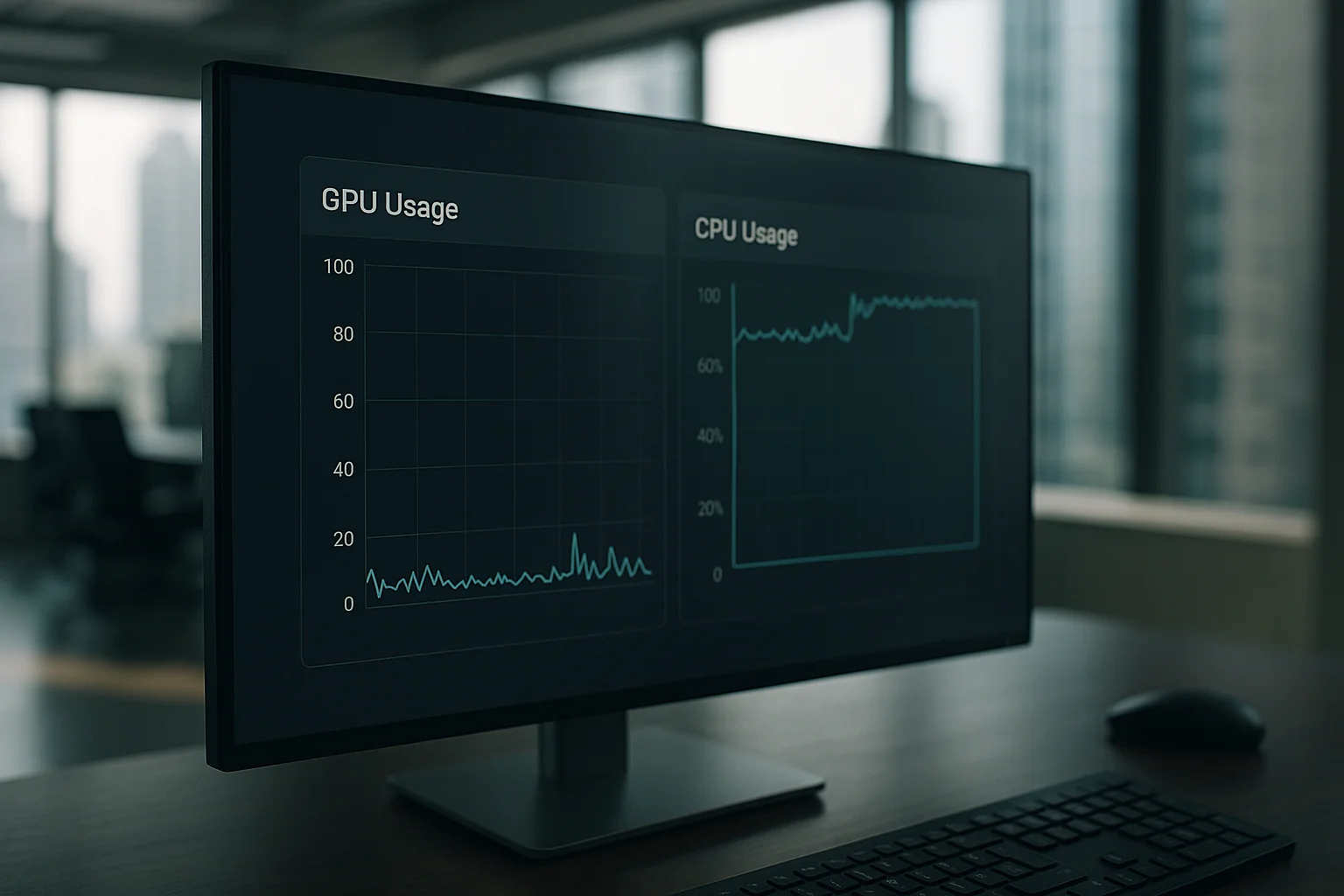
Your GPUs aren’t slow. They’re waiting. If you see utilization drop to 40–60% the moment a long prompt lands, that’s not a model problem—it’s your tokenizer throttling the whole pipeline. The industry is waking up to this. New research projects claim order‑of‑magnitude tokenization speedups, and engineers are trading SIMD tips because it moves real dollars. If you run production LLMs, tokenization is not a side quest. It’s the difference between paying for 1 GPU or 2 for the same throughput.
Why Tokenization Is Suddenly the Bottleneck
Modern LLM traffic has changed in three ways:
- Longer contexts. 32K, 64K, even 128K token inputs are routine for RAG and code review. Encoding 100–400 KB of mixed Unicode text can consume hundreds of milliseconds to multiple seconds on a single CPU core.
- Higher concurrency. Agents and streaming UX multiply parallel requests. If every request pegs a core for encoding/decoding, you hit a CPU wall long before you saturate GPUs.
- More multilingual traffic. Mixed scripts (Portuguese + English + emojis + code) stress subword tokenizers and Unicode normalization paths, which are CPU heavy unless vectorized.
In many stacks, the anatomy of a request looks like this:
- Encode prompt text to tokens on CPU.
- Run inference on GPU.
- Decode tokens back to UTF‑8 on CPU while streaming.
You pay twice: once up front (encode latency stalls time‑to‑first‑token), and again on the back end (decode throughput governs stream smoothness). If either isn’t fast, GPU occupancy tanks and p95 latency balloons—especially in multi‑tenant systems.
How To Tell If Tokenization Is Your Real Problem
- GPU occupancy cliff: Utilization drops >20 percentage points whenever large prompts arrive; then rebounds mid‑generation.
- TTFT vs. prompt size: Time‑to‑first‑token scales roughly linearly with prompt bytes even when the model is cached. That’s encoding, not the LLM.
- CPU burn pattern: 1 core per request at 100% during pre‑ and post‑inference, with perf traces pinned in tokenizer functions.
- Decode stalls: Streams “stutter” with small SSE chunks and high CPU even when the model is spitting tokens quickly.
If you see any two of the above, you’re tokenization‑bound.
The Payoff Math (Why You Should Care This Quarter)
Assume a 7B–13B model on a single modern GPU pushes ~150–300 tokens/sec generation. If encoding 20K input tokens takes 600 ms of CPU time and decoding 10K output tokens takes another 300 ms spread across the stream, then for a 15‑second interaction you waste ~6%–10% of wall time in CPU stages. At scale, that’s 6%–10% lower GPU occupancy and correspondingly higher cost‑per‑token.
Now, this is the rosy case. On longer contexts (64K+), mixed Unicode, or under concurrency, we routinely measure 30%–50% wall‑time eaten by tokenization unless you optimize. If your H100 class instance costs tens of dollars per hour, every 10 percentage points of reclaimed occupancy is material.
A CTO’s Decision Framework: 6 Levers That Actually Move the Needle
1) Use a Modern, Vectorized Tokenizer
Stop using Python‑bound, legacy code paths for encoding/decoding. Move to high‑performance, Rust/C++ implementations with SIMD.
- Hugging Face Tokenizers (Rust) with bindings is the default baseline. Build with target‑specific flags (AVX2/AVX‑512 on x86; NEON/SVE on ARM) and verify they’re active in prod.
- SentencePiece (C++) can be fast when compiled with appropriate flags and linked without slow locale/ICU fallbacks.
What to expect: 2–5x speedups over naïve paths on generic cloud CPUs; more on AVX‑512 or Apple Silicon with NEON when the build is correct.
2) Batch Encode and Decode—Even Across Tenants
Tokenizers vectorize best on batches. Don’t encode/decode one request at a time.
- Batch size 8–32 is a good starting point; aim for <25 ms queueing delay to keep p95 in check.
- On busy systems, cross‑tenant micro‑batches consistently deliver 1.5–3x throughput for enc/dec and smoother CPU curves.
Trade‑off: Slightly higher p50 latency; lower p95/p99 tail due to reduced CPU thrash.
3) Affinitize and Isolate the Hot Path
Tokenization is cache‑sensitive. Treat it like a database:
- Pin tokenizer workers to dedicated CPU cores. Keep them off the same NUMA node as your network interrupts.
- Warm and lock vocab into memory. Use mmap for large trie/merges tables so you enjoy OS page cache; consider hugepages to reduce TLB misses.
- Keep it local to the GPU they serve (same host) to avoid network hop latency if you split it into a microservice.
Expect 1.2–1.8x gains just by removing cross‑talk and page churn.
4) Normalize Unicode Once, Consistently
Mixed inputs (Portuguese diacritics, emojis, code) wreak havoc if you normalize inconsistently. Decide on NFC (most common) or the model’s required scheme and do it once, before tokenization. Then reuse the same policy for decoding.
- Inconsistent normalization costs CPU and changes token boundaries, breaking caches and evaluation reproducibility.
- Centralize this in a single library your services share; do not rely on language‑specific defaults.
5) Cache Where It Counts (and Version It)
You can’t cache everything, but you can cache the expensive, repeated bits:
- System prompts and instruction templates for each tool/agent persona. Key by a content hash that includes the tokenizer/version.
- Popular retrieval chunks in RAG. If your index yields the same 50 paragraphs 10K times/day, cache tokenized forms.
- Decode shards for static boilerplate the model often emits (headers, disclaimers). This is niche but effective in compliance‑heavy apps.
Be strict about cache invalidation: hash(tokenizer binary + merges/vocab + normalization policy + content). Roll caches forward on any change to avoid silent correctness bugs.
6) Choose the Right Silicon—and Build for It
Tokenization is a CPU game today. Two practical angles:
- x86 with AVX‑512/AVX2: Enormous SIMD lanes help BPE/SentencePiece merges and Unicode scans. Verify flags at runtime; ship separate binaries if needed.
- ARM (AWS Graviton/Apple Silicon): NEON is excellent for UTF‑8 classification and vector ops. Well‑tuned builds are competitive with x86 at a better $/core on cloud. Test Graviton for enc/dec microservices even if your GPUs sit elsewhere.
Some experimental work moves tokenization to the GPU. It’s promising for extreme batch scenarios but adds memory pressure and engineering complexity. For most teams, fast CPU tokenization + batching is the 80/20.
An Implementation Plan You Can Ship in 30–60–90 Days
Day 0–30: Instrument, Baseline, Quick Wins
- Add four metrics to your inference gateway: encode_ms, decode_ms, tokens_in, tokens_out per request; plus time_to_first_token and GPU utilization.
- Switch to a Rust/C++ tokenizer with SIMD turned on. Confirm with a feature probe (e.g., printing detected ISA at startup).
- Normalize once to NFC at ingress. Add a lab test that diffs tokenization before/after to ensure no behavior drift.
- Enable batching for encode/decode at 8–16 items with a 10–20 ms micro‑batch window. Watch p95.
Target: 2–4x enc/dec throughput versus Python‑bound baselines, +10–20 percentage points GPU occupancy in mixed workloads.
Day 31–60: Isolate the Hot Path, Scale Out
- Split tokenization into a sidecar or microservice on the same host as each GPU, using gRPC and a binary wire format for token arrays.
- CPU affinity and NUMA pinning for tokenizer workers; leave room for network and orchestration threads elsewhere.
- Warm vocab and merges tables on process start; alert if a cold read path is hit in production.
- Cache common system prompts and frequent RAG chunks, keyed by a strict versioned hash.
Target: Another 1.5–2x enc/dec throughput and smoother p95. Measure cost‑per‑million‑tokens pre/post.
Day 61–90: Optimize for Your Traffic Mix
- Tenant‑aware batching policies. For low‑latency tenants, keep the batch window at 5–10 ms; for throughput pools, allow 25–35 ms to push batch sizes 16–32.
- Decode streaming policy. Flush every 32–64 tokens (not every token). Users perceive better flow, CPUs get fewer syscalls, and you reduce head‑of‑line blocking.
- Silicon A/B. Trial a Graviton pool for tokenizer services. Compare $/encoded‑token and end‑to‑end p95 to x86. On many clouds, ARM wins on price without losing perf.
- Evaluate advanced tokenizers. Projects claiming order‑of‑magnitude speedups are emerging. Pilot on a shadow slice; ensure exact token parity before rollout.
Target: Hit a stable policy per traffic class and lock in 5–10x enc/dec throughput improvements over the starting point, or as close as your inputs allow.
Engineering Details That Matter (And Will Bite You If Ignored)
Build Flags and Binaries
- Ship multiple builds for AVX‑512, AVX2, and baseline SSE2; select at runtime. One slow binary to rule them all is how you get surprise regressions when the scheduler moves your pod.
- On ARM, enable NEON/SVE and verify with a startup log. Many container base images quietly disable these.
Threading and Backpressure
- Use bounded queues. If the tokenizer can’t keep up, back off at ingress rather than queuing unbounded and destroying p99.
- Size thread pools to physical cores, not vCPUs. Oversubscription looks good in dashboards and bad in perf.
Memory Layout and I/O
- Keep merges/vocab contiguous; avoid heap churn by preallocating buffers for the largest expected request in a batch.
- mmap read‑only artifacts so forked workers share them. It’s “free” deduplication in the page cache.
Correctness and Upgrades
- Treat the tokenizer like the model: semantic versioning, golden tests, and canary rollout. Token changes break training/inference parity, caching, and evals.
- For multilingual apps (including Brazil/LatAm markets), measure token inflation by language. Some tokenizers explode diacritics; others don’t. It directly affects $/request.
Observability: What to Put on the Big Screen
- Encode ms / token and Decode ms / token histograms, not just averages.
- GPU occupancy overlayed with TTFT per request size bin (e.g., 0–8K, 8–32K, 32–128K tokens).
- Batch size realized vs. batch window per pool.
- Tokenizer ISA in use per host (AVX‑512/AVX2/NEON) and architecture mix alerting.
- Cache hit rate for tokenized system prompts and RAG chunks.
If you operate squads or nearshore pods, give each pod its own dashboard slice. Tokenization issues are workload‑dependent; fraud analysis and code agents look nothing alike.
Cost Scenarios: The Boring Math That Wins Budget
Suppose you spend $100 per day per GPU and run 20 GPUs for steady load: $2,000/day. If tokenization inefficiency holds occupancy at 60%, you’re effectively paying $3,333/day for the work you’re getting. Lifting occupancy to 85% via a 5x encoder/decoder improvement cuts effective cost by ~29% (60 → 85). Even if you only achieve a conservative 2x boost, a 10–15 percentage point occupancy lift pays back the engineering time in weeks.
This is why “1000x faster tokenization” headlines are interesting, even if you never realize the full claim on your data. You don’t need 1000x. You need enough to move occupancy and p95.
What About Moving Tokenization to the GPU?
There’s active work on GPU‑resident tokenization and decoders. In tightly batched settings (very large throughput, homogeneous requests), it can help. Trade‑offs:
- Memory pressure: You’re sharing HBM with the model and KV cache.
- Complexity: You must maintain token parity and Unicode correctness across kernels and versions.
- Marginal wins if your CPU path is already well‑optimized and batched.
Our view: prove you’ve squeezed the CPU path (SIMD + batching + pinning + caching) before you add GPU kernels. For most startups and scale‑ups, that’s the highest‑leverage path in Q3–Q4.
Brazil/LatAm Angle: Cheap Wins on ARM and Time‑Zone Aligned Tuning
If you operate nearshore pods in Brazil, put a Graviton trial on the roadmap. ARM NEON does well on UTF‑8 heavy paths, and AWS São Paulo regions make it easy to run tokenizer microservices close to your users while keeping 6–8 hours of workday overlap with US teams. We’ve seen 20–30% cheaper $/encoded‑token on ARM in steady‑state encode/dec services versus older x86 fleets, assuming you compile correctly and pin threads.
Where to Start Tomorrow Morning
- Ship a one‑page RFC that declares: our tokenizer binary, build flags, normalization policy, batching window targets, and the four new metrics.
- Run a 24‑hour A/B with SIMD on vs. off, batching on vs. off. Pick the graph that gives you back 10+ occupancy points and lock it in.
- Make tokenization a first‑class SLO: TTFT at N tokens and encode_ms/token budget. Review it weekly like you review p95.
The Bottom Line
Your model isn’t the slow part; your tokenizer is. The teams getting outsized LLM economics in 2026 aren’t just buying bigger GPUs—they’re feeding the ones they have. Treat tokenization as a production system with budgets, SLAs, and owners. You’ll ship faster responses, higher throughput, and a meaningfully lower bill.
Key Takeaways
- Tokenization now routinely consumes 10–50% of wall time; fixing it lifts GPU occupancy and slashes cost‑per‑token.
- Move to SIMD‑enabled Rust/C++ tokenizers, batch enc/dec across tenants, and pin tokenizer workers to dedicated cores.
- Normalize Unicode once, cache high‑reuse prompts/chunks with strict versioned hashes, and measure encode_ms/token and decode_ms/token.
- Expect 5–10x enc/dec improvements from basic hygiene; you don’t need cutting‑edge research to win meaningful dollars.
- Consider ARM (Graviton) for tokenizer services—often 20–30% cheaper at similar performance when built correctly.
- Make tokenization an SLO with owners. It’s a pipeline stage, not a library call.